Redirect

Showing posts with label rural lens. Show all posts

Wednesday, May 5, 2010

Connecting with others who "get rural"


Today I participated in a conference call for the Annual General Meeting of the Canadian Rural Research Network (CRRN). The CRRN is "is a new means to support information sharing and networking among stakeholders with an interest in rural research". The blog connects partners from across Canada working on topics related to the well being of rural communities - and I'd encourage people to check out their site and subscribe for their updates.

Sometimes as an academic who works on rural development topics, I find myself isolated and unable to fully tap into others who "get it". What I mean by that is that in order to study and contribute to rural development, one really needs to understand the complexities and realities of life in the rural context. I find that most academic institutions, programs and faculties use an urbancentric (or urban biased) approach to education and research. Our textbooks contain content with urban examples, urban processes and urban assumptions. Our campuses are located in urban settings which require rural youth to travel to obtain their education and strip rural areas of much needed human capital (for those campuses that are located in rural areas, they often have to rationalize their existence for public investment). I also note, that faculty are by and large not using "place based" teaching to help students understand rural areas.
These practices are not fully preparing students for engagement with rural areas. I remember years ago, I had a student that called after graduation and said "Nicole - this community doesn't have a Chamber of Commerce, a Planner, an Economic Development officer or a tourism marketing organization - so non of the stuff I learned about tourism development really fits here!". This was a good wake up call for me about the information that goes in - directly impacts their ability to create change when students are out in the field. Now, I use a rural lens when teaching, I encourage those from rural areas to comment on how approaches would work in a rural area, and most importantly - I take University students out into rural areas for "rural immersion" experiences for 3-4 weeks every year so they can develop a rural lens.

When I started to study rural tourism development in BC about a decade ago, I found that the word rural rarely appeared on the radar of academic institutions or within government agencies. For those that did recognize the word (and indeed this still needs clarity now and again) they often assumed that rural means agriculture or farming. While most of agriculture is rural, rural is much more than agriculture!

But things look up - there is a growing cluster of expertise in the academic world that has chosen to study a variety of topics in the rural context. The CRRN is one example that holds promise to connect researchers. The TRIP project that I lead in BC certainly connected a number of us in this region. I noticed a promising organized approach in Alberta called the Alberta Rural Development Network (having a conference next week!). And, next week I am attending a two day dialogue on rural policy in Victoria hosted by the BC Rural Secretariat. All of these initiatives are positive and demonstrate growing recognition of systems and stakeholders that are aligning to create more positive change for the people in rural Canada.


Friday, April 9, 2010

Historical week for BC tourism


  • This week was an historic one for rural BC and for the role of tourism in its diversification. The first BC rural conference was held at the South Thompson Inn just outside of Kamloops as part of the REDTREE project by Thompson Rivers University. I have been to many conferences over the years and am joining others in saying that this is one of the best ever held in BC. Why was it so great?

    The opportunities for learning were unlike any program I have seen assembled around tourism in BC - there were sessions on everything from sustainability, mountain bike trails, signage, product development and capacity building to Web tools, amenity migration and geocaching.

    The delivery was innovative - there were lots of workshops, activities, plenaries and plenty of time for networking.

    The venue was spectacular - the South Thompson Inn setting provided an intimate gathering spot and everyone remained on site to create space for networking and developing ideas. The staff was great and the food was fantastic (and local).

    The delegate list was diverse - the session had lots of rural operators, council members, aboriginal leaders, policy makers from federal and provincial agencies, field agents, academics, consultants, students and marketing associations. This provided a rich set of players to share ideas, realities and voices to the complex array of stakeholders involved in tourism development. And, no one audience was privileged in their links to tourism in the province. They came from all corners of BC and from outside the province including Alberta, Quebec, California, Sweden and Brazil!

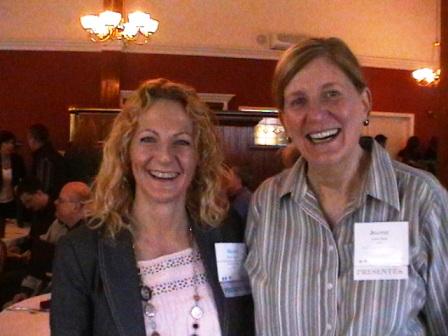
    For me, the event was very special as it marked the realization of a vision that I shared with my colleagues in TRIP since 2006 when we learned that rural operators and leaders wanted a venue to get together to share and learn together. Watching people from all over the province shake hands, sit down together and learn from the wealth of knowledge around the venue was fantastic. I had the opportunity to reconnect with people we met on the road with our students, and I had the chance to meet new people like Anna Pollock and Joanne Steele whose work I have admired.

    One of the goals of TRIP was to develop a cluster of expertise and network around rural tourism in BC and it was so evident that we can collectively check that one off our list. Our partners were well represented in the event, and some of my closest colleagues and students who engaged in TRIP extension tours were all around and involved. This showed the follow through and commitment of the partnership to seeing our ideas through and in fact, we are all leaving inspired to do more... (keep posted for new ideas for a TRIP phase 2!).

    Congratulations to Rob Hood and his great team at TRU including Sydney Johnsen, Cynthia Schaap and all the great students. The organization was super and kept people engaged throughout. We truly had a great "experience". In particular though, when I talked about doing things using a rural lens, the team did many things to make the conference work for rural BC residents including:

    They invited them to the event
    They tailored the topics to suit their needs
    They created a travel subsidy to make it accessible
    They recognized that their time away from the community was valuable and ensured an action packed learning program
    They kept it in a rural setting
    They benefited a rural operator
    They used workshops to allow for engagement and learning
    They kept the speakers relevant to rural issues and realities
    They focused on the big picture facing rural BC
    They made room for socializing amongst delegates by having adventures, socials, bus outings, and plenty of networking time
    And probably many more.

    We are talking about the logistics for the next gathering and are committed to continue the opportunity. Keep posted, tell your contacts and register early because based on the success of this inaugural event - it will sell out super quick!

    PS - the adventure studies program offered a social opportunity on Wednesday night and my team was called the "Roper's" due to Miriam Schilling's abilities with a lariat in one of the activities. Our team photo includes Gavin McLelland (being caught), Miriam Schilling, myself, Victoria Simpson,Kimberly May, and Sara Weaver (Simone Carlysle-Smith was missing for a moment).